

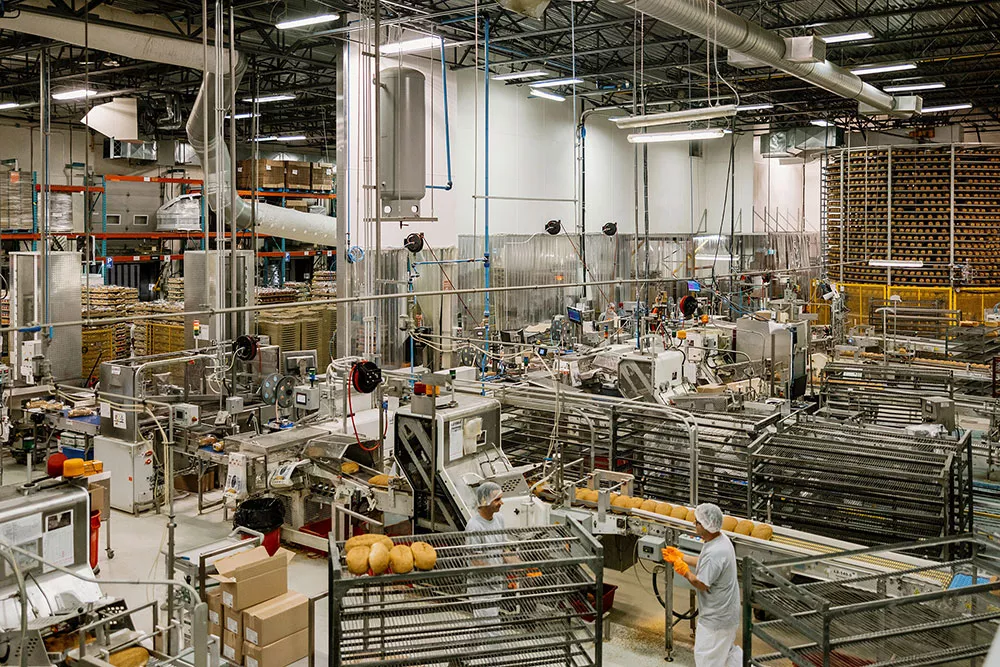
Client :St-Méthode Bakery
Project duration :2 years – ongoing
Sector of activity :Agri-food
AI Expertise :AI Strategy/Data Science
We developed machine learning algorithms that predict bread height at oven exit based on data captured at different points along the production line.
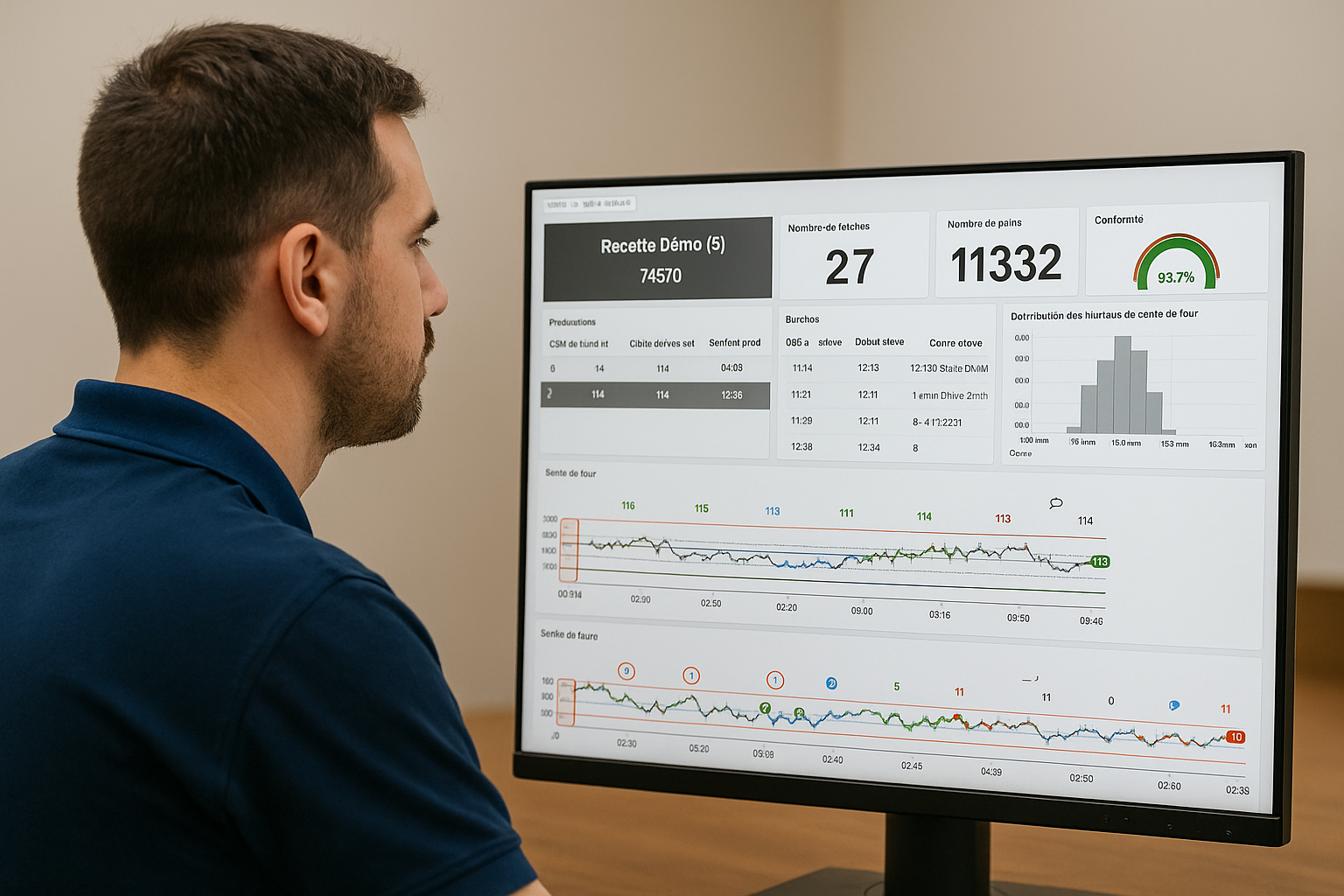
These predictions are delivered through interactive dashboards, enabling teams to react faster and anticipate variations with greater accuracy.
Our client

Stéphane Perreault, Vice President of Operations at Boulangerie St-Méthode, leads one of Quebec’s most recognized bakeries.
His team wanted to modernize their analysis and monitoring tools to improve decision-making on the production line and reduce the number of downgraded loaves.
The idea
Operators constantly needed to monitor bread height during production and make fast, informed decisions while considering multiple variables – temperature, humidity, fermentation, baking, and more.
The idea was to use artificial intelligence to provide clear, data-driven recommendations to operators – and eventually enable direct feedback to equipment for automated adjustments.

The adventure
We began with a comprehensive data analysis of the production line to identify key correlations and learn the complete bread-making process.
Next, we built a proof of concept showing a measurable correlation between heights at two key stages and revealing future opportunities for predictive control.
We then designed bread height prediction algorithms, whose outputs are displayed in interactive dashboards used by both R&D and production floor teams.
Throughout the project, we worked closely with Boulangerie St-Méthode’s team to ensure the solution met their operational needs and reflected real-world production dynamics.
The results
-
Dashboards are deployed and actively used by teams.
-
Data is now centralized, improving collaboration between R&D and operations.
-
The system provides new visibility into process relationships and key influencing factors.
-
Teams gain actionable insights that help them anticipate and adjust earlier in the process.
Next steps
-
Gradually incorporate more analytical factors to refine predictions.
-
Develop real-time recommendation features for operators.
-
Explore automated feedback loops to allow the system to adjust equipment parameters autonomously.